Short answer: for most solo developers in October 2026, Claude Code on the $20 Claude Pro plan is the best default: Opus 5.5 is now the default model even on Pro, and Claude models top the independent Terminal-Bench 4.0 board. Pick Codex instead if you already pay for ChatGPT or care most about cost per task, since GPT-6.1 Sol is far cheaper per solved task. Pick Cursor only if you live in the editor and are happy with Grok models, because on the new plans Claude, GPT and Gemini are billed at API prices from the first request.
Last updated: October 15, 2026. Prices and limits checked against Anthropic’s, OpenAI’s and Cursor’s own pricing pages and docs on that date. I update this post monthly; the changelog at the bottom says what moved.
The claude code vs codex question used to be about which model was smarter. This month it’s mostly about billing. Cursor moved into a bundle with Grok and X on October 12, OpenAI retired GPT-5.5 from Codex on October 14, and Anthropic made Opus the default on Pro in late September. If you read a comparison from the summer, half of its pricing table is now wrong.
Quick verdict by use case
| If you are… | Pick | Why |
|---|---|---|
| A solo dev who wants one $20 subscription | Claude Code (Claude Pro) | Opus 5.5 by default, one pool for chat and coding, strongest agent harness for multi-file work |
| Already paying for ChatGPT Plus | Codex | Included in Plus: CLI, IDE extension, cloud tasks and GitHub code review |
| Cost-sensitive at API prices | Codex with GPT-6.1 Sol | Much cheaper per task than Opus 5.5 on Vals’ Terminal-Bench 4.0 |
| Editor-first, tab-completion addict | Cursor | Still the smoothest editor, but third-party models now cost extra on new plans |
| On a legacy Cursor Pro/Pro+ plan | Stay put for now | Legacy plans keep their included third-party usage; switching is optional and permanent |
| Running agents most of the day | Claude Max 5x or ChatGPT Pro 100 | Both $100; Pro plans currently have no 5-hour limit, Max gives 5x Pro per session |
My own bias, stated up front: I run Claude Code as the main driver and use a second tool as a reviewer. One agent writing and a different one reviewing catches more than either alone, and it hedges against whichever vendor has a bad month.
Pricing & limits table (as of Oct 2026)
All prices are US monthly, before tax, checked October 15, 2026.
| Claude Code | Codex | Cursor (new X Subscription) | |
|---|---|---|---|
| Free tier | No Claude Code on Claude Free | Free and Go ($8): GPT-6 Luna in the desktop app, subject to rollout | Free: limited agent usage |
| Entry plan | Pro: $20 ($17/mo billed annually) | Plus: $20 | Plus: $8 (Grok and Composer only) or Premium: $30 |
| Heavy plans | Max 5x $100, Max 20x $200 | Pro $100, $200 or $500 | Super $100 (15x Plus), Ultra $200 (50x Plus) |
| How limits work | Rolling 5-hour session plus weekly limits, shared with Claude chat | Estimated messages per 5 hours by model; weekly limits may apply; Pro has no 5-hour limit right now | One weekly pool for Cursor’s own models, shared with the Grok apps and Grok Bot |
| Models included | Opus 5.5 (default), Sonnet 5.5, Haiku 5.5; Fable via usage credits on Pro, own weekly limit on Max | GPT-6.1 Sol, GPT-6 Sol, GPT-6 Luna, GPT-6 Astra | Grok 4.7, 4.6, 4.5 and Composer 2.5 in the pool; Claude, GPT and Gemini at API list price from prepaid credit (Premium and up) |
| When you run out | Usage credits at API rates, or upgrade | Buy credits, or use an API key at API rates | Wait for the weekly reset, top up, or upgrade |
A few details that matter more than the headline prices:
- Claude: Max subscribers also get $100 (5x) or $200 (20x) a month in Claude Platform API credits. They do not cover interactive Claude Code or extra usage. They are for the Claude API, the Agent SDK and your own apps. For an indie founder shipping AI features, that’s a real perk; for coding, it changes nothing.
- Codex: OpenAI’s published Plus estimates per 5 hours are 15–160 local messages on GPT-6.1 Sol, 5–45 on GPT-6 Astra and 350–3,000 on GPT-6 Luna. Those ranges are wide on purpose, and cloud tasks use more. New Pro 200 subscriptions since late September get a lower allowance than before; grandfathered subscribers keep the old one through October 29.
- Cursor: existing Pro ($20), Pro+ ($60) and Ultra ($200) subscribers keep their legacy plans, including the included third-party usage, unless they switch. The Plus tier has no cloud agents, no Bugbot and no third-party models. Annual billing is $300/yr for Premium.
The trap with this table: none of these allowances are comparable. Anthropic meters a shared 5-hour window, OpenAI publishes message ranges per model, and Cursor meters a weekly pool that your Grok chats also drain. The only fair comparison is your own week of real work, which is why the next section is a test protocol, not a winner’s podium.
Same task, three tools: how I’m testing them
I’m being transparent here: I haven’t finished a clean side-by-side run on the October plans yet, so there are no timing or cost numbers in this section. Anyone quoting precise “Claude took 11 minutes, Codex took 14” results from a single run is mostly measuring luck. Below is the exact protocol I’m using, so you can run it on your own repo in an afternoon. I’ll add my results and screenshots here when they’re done.
1. Same starting point. One commit, three worktrees, one shared instruction file. All three tools read AGENTS.md, so put your project rules there (see CLAUDE.md vs AGENTS.md for the thin-CLAUDE.md setup).
git worktree add ../app-claude -b test/claude
git worktree add ../app-codex  -b test/codex
git worktree add ../app-cursor -b test/cursor
2. Same task, same prompt. Pick something you’d really ship this week: a Stripe webhook, an auth edge case, a settings page. Paste this into all three, word for word:
Task: add a Stripe webhook handler for checkout.session.completed that marks
the matching user as paid in the database.

Constraints:
- Follow the conventions in AGENTS.md.
- Verify the webhook signature; never trust the client.
- Add or update tests and run them until they pass.
- Do not touch unrelated files.

When done, summarize: files changed, tests run, anything you were unsure about.
3. Same measurements. Check each tool’s own meter before and after:
- Claude Code:
/usage(and/contextif the session got long) - Codex CLI:
/statusshows remaining limits during a session - Cursor: remaining usage shows in editor settings and under Usage at grok.com/dashboard
4. Score it like a reviewer, not a fan. Copy this sheet:
| Metric | Claude Code | Codex | Cursor |
|---|---|---|---|
| Wall-clock time to green tests | |||
| Times I had to correct it | |||
| Ran tests without being asked | |||
| Unrelated files touched | |||
| Usage meter: before / after | |||
| Would I merge it as-is? |
5. Swap reviewers. Have Codex review the Claude branch and Claude review the Codex branch. Disagreements between them are the most useful output of the whole exercise.
What should you expect? Going by public benchmarks and a few weeks of r/ClaudeCode, r/codex and r/cursor threads: Claude Code with Opus 5.5 tends to plan more and finish multi-file changes with fewer corrections. Codex with GPT-6.1 Sol is fast and frugal but sometimes needs tighter prompts. Cursor on Grok models is quick for scoped edits and weaker on long autonomous tasks. Treat that as a hypothesis to test, not a result.
Where each tool wins / fails
Claude Code
Wins
- Strongest models for agentic work right now. On Vals’ Terminal-Bench 4.0 (updated October 13), Claude Opus 5.5 and Sonnet 5.5 sit first and second. That benchmark uses a neutral harness, so it ranks models, not Claude Code itself.
- Opus 5.5 is the default on Pro since Claude Code 2.1.280 (September 22). Before that, Pro defaulted to Sonnet.
- The best customization stack for solos: CLAUDE.md, skills, hooks, subagents. Start with a CLAUDE.md template.
- Runs in the terminal and as an extension in VS Code, JetBrains and VS Code forks, including Cursor.
Fails
- Chat and coding share one pool. A long research chat in the Claude app at lunch is quota you don’t have for coding that afternoon.
- Pro gets Fable only through paid usage credits. Max has a separate weekly Fable limit.
- Long sessions burn limits fast. If you hit the wall by Wednesday, read how to reduce Claude Code token usage before you upgrade.
Pitfall I see constantly: if an ANTHROPIC_API_KEY environment variable is set, Claude Code uses it instead of your Pro/Max login and you pay API rates. Check without printing the key:
[ -n "$ANTHROPIC_API_KEY" ] && echo "API key set: Claude Code will bill the API, not your plan"Codex
Wins
- Price-performance. On the same Terminal-Bench 4.0 board, GPT-6.1 Sol scores 55.05% at $1.72 per task against Opus 5.5’s 65.15% at $13.20. If you pay API prices, that gap is huge.
- Plus includes a lot: CLI, IDE extension, cloud tasks, GitHub code review with
@codex, Slack. The CLI is open source. - Pro plans currently have no 5-hour limit, which matters if you work in long bursts.
Fails
- The $20 tier is the most-complained-about plan in the threads I read. Several r/cursor and r/codex users report running out of weekly allowance on Plus within days when they stick to the strongest models.
- Model churn. GPT-5.5 left Codex for ChatGPT sign-in on October 14, and GPT-6.1 Sol became the CLI default on October 7. Check saved configs and scripts:
grep -rn "gpt-5.5" ~/.codex/ .github/ scripts/ 2>/dev/null
codex --model gpt-6.1-sol
Cursor
Wins
- Still the best editor experience: tab completion, inline edits, a polished agent panel, cloud agents and Bugbot on Premium and up.
- If Grok models suit you, the new plans give more of them per dollar. SpaceXSI says each plan includes at least twice the coding usage with its own models compared with the old Cursor plan it replaces. That’s the vendor’s claim; I haven’t verified it.
- The pool now resets weekly, so one heavy day can’t eat your whole month.
Fails
- Model neutrality was Cursor’s selling point, and the new plans weaken it. On Premium, Super and Ultra, Claude and GPT are billed at API list price from the first request. Nothing in the monthly fee covers them. Much of the pushback in Cursor’s official forum thread is about exactly this.
- OpenAI plans to stop supplying models to Cursor, with a proposed shutoff of November 12, 2026, and no new OpenAI models before then.
- Grok 4.7 ranks well below the Claude and GPT leaders on Terminal-Bench 4.0. That’s a neutral harness, and Cursor’s own agent may do better, so test it on your code before you commit.
- The pool is shared with Grok chat, Imagine and Grok Bot. Heavy Grok use outside coding shrinks your coding budget.
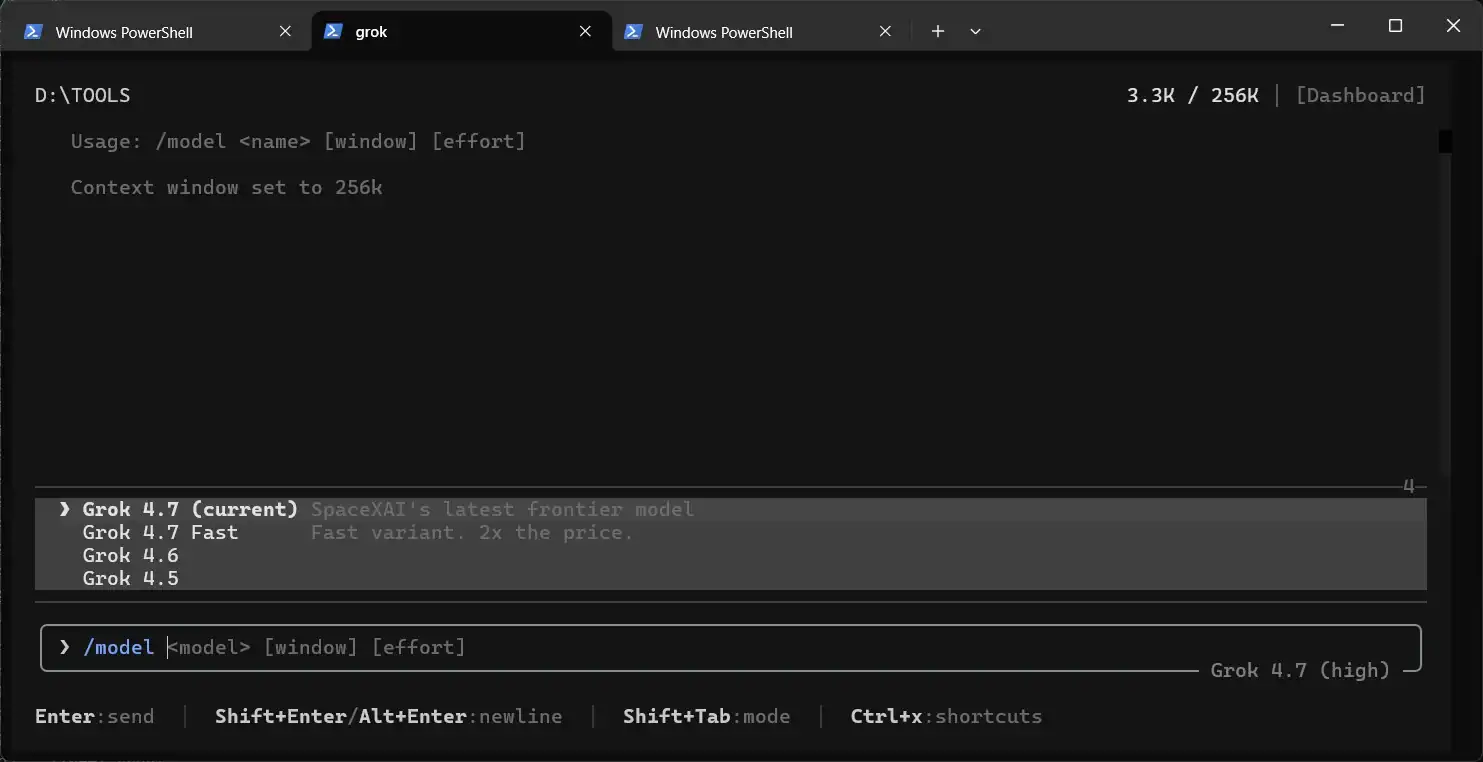
If you go with Cursor’s new plans, you’re mostly buying Grok usage. Learn the model lineup and its Fast pricing before you top up.
Best budget combos ($20 / $40 / $100+)
| Budget | Stack | Monthly | Best for |
|---|---|---|---|
| $20 | Claude Pro (Claude Code) + free editor | $20 ($17 annual) | Most solo builders |
| $20 alt | ChatGPT Plus (Codex) | $20 | Already on ChatGPT, budget-first |
| ~$40 | Claude Pro + ChatGPT Plus | $40 | One builder agent, one reviewer agent |
| ~$40 alt | Claude Pro + Cursor Plus | $28 | Claude Code for big tasks, Grok in Cursor for quick edits |
| $100 | Claude Max 5x | $100 | Daily heavy agent use; bonus $100 API credits for your product |
| $100 alt | ChatGPT Pro 100 | $100 | Long bursts (no 5-hour limit right now) |
| $120+ | Claude Max 5x + ChatGPT Plus | $120 | Heavy builder plus independent reviewer |
$20: one agent, no editor subscription. You don’t need Cursor to get a good editor. Install the Claude Code extension in VS Code (or in Cursor on its Free tier) and it runs on your Claude plan. Spend your $20 on the model, not the UI.
$40: builder + reviewer. This is the setup I’d recommend to most people who ship weekly. Claude Code writes, Codex reviews. With both tools reading one AGENTS.md, the switch costs nothing:
<!-- CLAUDE.md -->
@AGENTS.md

## Claude-only notes
- Run the test command in AGENTS.md before saying "done".
Then, on the feature branch, open Codex and run its built-in local review with /review. If you want to steer it, follow up with a plain prompt:
Review the changes on this branch against main. Focus on auth checks,
webhook signature verification, missing tests, and anything that changes
behavior outside the stated task. List issues by severity; don't fix yet.
$100+: pick the vendor whose model you trust most and go deep. Paying for Max 5x and Pro 100 at the same time is usually a waste for a solo developer. Pick one heavy plan and keep a $20 second opinion. At $200 a month, compare Max 20x with Pro 200, and remember that new Pro 200 subscriptions come with a lower allowance than the old one.
Two more lanes worth knowing about, which I’ll cover in their own posts: free and open-source agents you plug your own API key into (OpenCode, Cline, Aider), and a full monthly cost breakdown of a solo founder’s AI stack. Both are on the way.
Spending-cap checklist (do this on day one):
- Claude: decide whether usage credits are on. Pro/Max limits stop you, but credits keep going at API rates.
- Codex: extra credits are a purchase you choose. If you sign in with an API key instead of ChatGPT, you pay API rates.
- Cursor: set a monthly additional-usage limit under Additional usage credits at grok.com/dashboard/billing before you ever pick a Claude model.
Changelog (what changed this month / late 2026)
- Oct 14: GPT-5.5 retired from Codex for ChatGPT sign-in. GPT-6.1 Sol is the recommended replacement. API-key sessions aren’t affected.
- Oct 12: The X Subscription launched. Cursor plans for new customers are now Free, Plus $8, Premium $30, Super $100 and Ultra $200, with a weekly Grok pool and third-party models at API list price. Legacy Cursor plans continue for existing subscribers.
- Oct 8: GPT-6.1 Sol Ultrafast arrived in Codex, on Pro $500 (plus eligible Enterprise and Edu plans).
- Oct 7: Codex CLI 0.161.0 made GPT-6.1 Sol the default model. Claude Code added Haiku 5.5 (2.1.293).
- Early Oct: Anthropic added monthly API credits to Max ($100/$200) and Team plans. They don’t cover interactive Claude Code.
- Sep 29: OpenAI launched GPT-6.1 Sol at DevDay. New ChatGPT Pro 200 subscriptions get a lower allowance; grandfathering runs through Oct 29.
- Sep 28: Claude Sonnet 5.5 shipped in Claude Code (2.1.284).
- Sep 22: Claude Opus 5.5 became the default Opus model, and the default on Pro switched from Sonnet to Opus (2.1.280).
- Aug 28: OpenAI announced it will wind down supplying models to Cursor after SpaceX’s acquisition. Proposed shutoff: Nov 12.
- Earlier (June 2): Windsurf was renamed Devin Desktop. Same IDE, same plans.
Dates to put in your calendar: Oct 29 (Pro 200 grandfathering ends), Nov 12 (proposed OpenAI cutoff in Cursor), Nov 21 (GPT-5.6 Sol promotional pricing runs at least until then).
FAQ
Is Claude Code better than Codex?
For most solo developers today, yes on quality and no on price. Claude’s models lead Terminal-Bench 4.0, and Claude Code’s harness is excellent at multi-file work. Codex with GPT-6.1 Sol gets you most of the way for a fraction of the cost per task. This flips every few months, so pay monthly and re-check.
Codex vs Claude Code pricing: which is cheaper?
Both entry plans cost $20, so the real question is how far $20 goes. Neither vendor publishes fixed limits. OpenAI gives message ranges per model, and Anthropic gives a shared 5-hour and weekly pool. At API prices, Codex is clearly cheaper per task. On subscriptions, the only honest answer is to run the same week of work on both and watch /usage and /status.
Is Cursor still worth it after the X Subscription change?
If you’re on a legacy Pro or Pro+ plan with included third-party usage, keep it; nothing forces you to switch yet. If you’re new and mostly want Claude, using Claude Code directly is cheaper than paying API list price through Cursor Premium. Cursor makes the most sense now if Grok models handle your daily edits and you only reach for Claude occasionally.
Can I use Claude Code inside Cursor?
Yes. Anthropic’s Claude Code extension supports VS Code forks, including Cursor, and it uses your Claude plan’s limits, not Cursor’s pool. Plenty of people use Cursor’s editor with Claude Code doing the agent work.
What about Cursor vs Windsurf?
Windsurf is now Devin Desktop (renamed June 2, 2026). Cognition says the IDE, extensions, plans and pricing carried over. It’s worth a look if you want a multi-agent command center. It’s out of scope here, but any comparison still calling it “Windsurf” is out of date.